

Stellar Lumens (XLM) & Ripple’s native XRP coin are apples from the same tree. Distributed Ledger Technology (DLT) based blockchains have become popular since the regulatory breakthrough happened & institutions started seeking for immediate settlement solutions.
Sponsored
Now, the two OG altcoins compete in the fields of cross-border payment remittance, tokenization & Real World Assets (RWAs). Here, Stellar’s progress since last year has been undeniable: the official data puts Stellar Lumen’s RWA growth at roughly 350% since 2025, at $3.5 billion.
XRP vs. XLM: The Ultimate Multi-Billion RWA Showdown
To compare, the reported tokenized asset figures on the XRP Ledger are estimated at $2.5 billion, driving the biggest growth in tokenized United States (USA) treasuries, soaring from roughly $50 million to $418.5 million, yielding nearly 800% yearly gains by this metric.
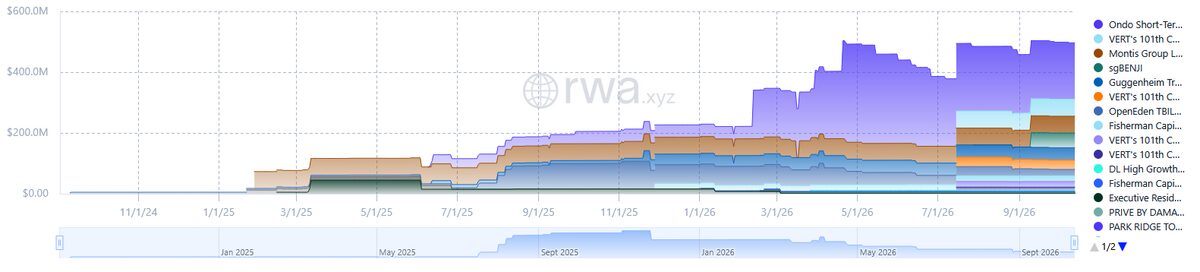
Stellar’s exponential growth is supported by chunky institutional products, including Franklin Templeton’s BENJI fund, which held approximately $605 million on Stellar as of October 6, 2026. Spiko’s tokenized money-market products added another $1.7 billion to the RWA pie.
Stellar’s technical setup could be considered more versatile, enabling a multi-faceted action plan for corporate entities using the tech stack. Aside from settlement in 5-7 secs, Stellar’s native XLM offers atomic multi-currency routing, protocol-native clawback, freeze & authorization.
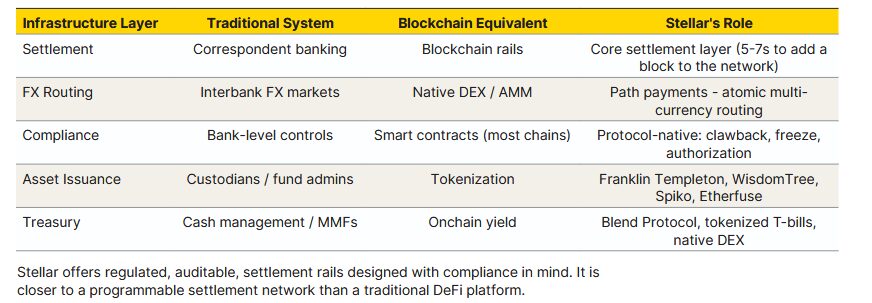
When an institution purchases a tokenized Treasury fund on Stellar, the investment generally goes into the fund’s underlying assets, not into buying XLM. Although transaction fees are collected in Stellar Lumens (XLM), the cheap costs make it less sensitive to price action.
On the other hand, Ripple’s XRP edges Stellar Lumens (XLM) by institutional exposure. The 9 currently-running exchange-traded funds (ETFs) garnered over $1.56 billion in cumulative net assets, driving interest from investors that aren’t typically familiar with the digital asset realm.
Main Ecosystem Growth Drivers & Influential Differences
That figure matches the Real-World Asset (RWA) product range on Stellar (XLM Network). This week, Evernorth’s listing of the inaugural XRP-only treasury fund on NASDAQ contributes roughly another $500 million, a figure that’s worth three days of XLM trading on Spot markets.
These investment vehicles create exposure to XRP itself, unlike tokenized funds that primarily hold Treasury securities. That’s why the implications on XRP’s price are closely tied to ETF flows, while Stellar Lumens (XLM) collects fees from stablecoin-powered tokenized funds & the broader ecosystem, employing a variety of stablecoins.
Presently, XRP has got the bigger grip on the cross-border payment market, while Stellar’s RWA growth is faster, but is also more concentrated around several big-name tokenization projects. If Stellar Lumens wants to flip XRP in the charts, the OG altcoin would have to add $80 billion to its market cap from current $6-7 billion capitalization ranges.
Read DailyCoin’s top crypto currency news today:
HBAR’s Double Bottom Meets Deutsche Bank Integration
XRP’s SWIFT Link Via Ripple Treasury Circles Back