

After a brutal weekend washout, Bitcoin rebounded toward the $79,000 level on Tuesday, recovering from a sharp dip below $75,000 as traders began to look past liquidation-driven selling and reassess broader macro conditions.
The forced deleveraging that dominated recent sessions showed signs of easing, helping stabilize prices after the market slid to multi-month lows.
Sponsored
Price action remained choppy, but the tone was noticeably calmer. BTC was trading around $78,600 at the time of writing, up over 5% on the day.
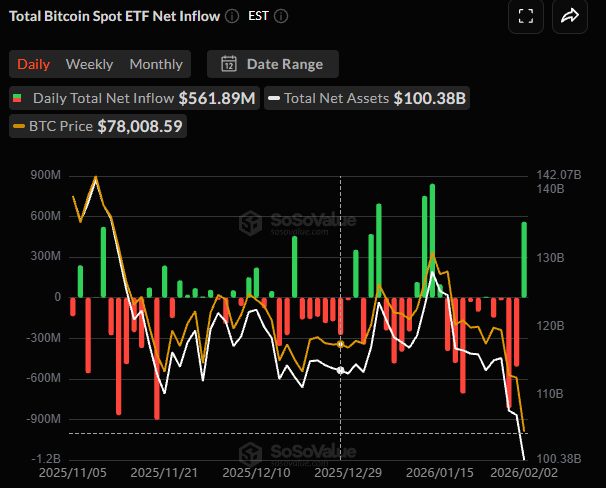
Liquidation pressure faded, and U.S. spot bitcoin ETFs saw renewed inflows.
ETF Inflows Return
On Tuesday, US spot Bitcoin ETFs recorded significant inflows for the first time in more than 10 days. According to data from SoSoValue, total daily net inflows reached nearly $561.9 million on Monday, with Bitcoin trading at an average price of around $78,000.
That marked the strongest daily inflow since mid-January, when U.S. Bitcoin ETFs posted $843.6 million in total net inflows.
Altcoins Rebound
The stabilization extended beyond Bitcoin. Ether climbed back above $2,340, while major tokens including Solana, BNB, XRP, and Cardano posted gains of roughly 3% to 6% over the past 24 hours, as the forced deleveraging phase cooled.
The total cryptocurrency market capitalization rose nearly 3% to about $2.64 trillion, according to CoinMarketCap data.
Despite recent gains, the majority of large-cap tokens have fallen sharply over the past seven days, with declines hitting up to 20%.
Entering the Bear Market?
Market analysts are cautious, noting that Bitcoin is showing early signs of a bear market.
On-chain data from CoinGlass shows losses spreading across the supply, even though prices remain above the realized value. The share of supply in loss has jumped to around 44% and continues to climb, showing a pattern that historically signals the start of prolonged downturns rather than a typical pullback.
Losses are rising without widespread panic, suggesting the market is weakening structurally. Past cycles show that true bottoms often form only after losses expand further and prices compress more deeply. On-chain metrics indicate that downside risk remains, pointing to a potential extended bear phase for Bitcoin.
Why This Matters
While short-term ETF inflows and a bounce above $78K offer relief, on-chain data shows structural weakness in Bitcoin, signaling that downside risk and a potential prolonged bear phase remain.
Check out DailyCoin’s hottest crpyto news now:
SWIFT Embraces XRP’s Playbook: Real-Time Transfers Coming
Bitcoin Tests $75,000 as Risk-Off Trade Sweeps Crypto
People Also Ask:
A Bitcoin ETF (Exchange-Traded Fund) allows investors to gain exposure to Bitcoin without directly holding the cryptocurrency.
Supply in loss refers to the percentage of Bitcoin held at a price below the current market value. Higher values often indicate market stress.
On-chain metrics track blockchain data such as supply distribution, wallet activity, and realized price. Changes in these can reveal structural weakness or potential reversals.
A bear market occurs when cryptocurrency prices experience prolonged declines, often accompanied by increased selling pressure and investor caution.