

After seven consecutive days of inflows, U.S. Bitcoin ETFs recorded net outflows, briefly pressuring the cryptocurrency below $69,000. Despite the short-term decline, institutional interest remains strong, with Morgan Stanley filing an updated S-1 for a Bitcoin ETF.
ETF Outflows Hit $250 Million, Pressure BTC Briefly
Following a week of positive inflows, U.S. Bitcoin ETFs experienced withdrawals, signaling some profit-taking among investors.
Sponsored
According to SoSoValue data, more than $250 million flowed out of U.S. Bitcoin Spot ETFs over the past two days.
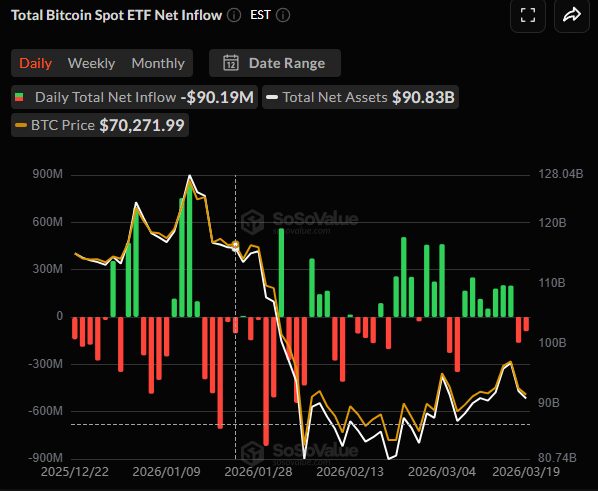
The outflows coincided with a temporary dip in BTC prices, highlighting the influence of ETF liquidity on the broader market.
At the same time, Morgan Stanley’s updated Bitcoin ETF filing keeps optimism alive, showing big investors are still betting on the long term, not just short-term gains.
BTC Volatility Driven by Oil, Fed Signals, and Market Trends
Bitcoin (BTC) price rebound from by more 3.6% from $68.8K lows on Thursday toover $71.3K, ir siuo metu trades at around $70.6K.
Bitcoin’s recent price swings were shaped by several factors. Oil briefly jumped above $110 after Iran-related strikes in the Gulf, but later eased, reducing immediate geopolitical pressure. Broader market moves were also influenced by Federal Reserve signals, with no rate cuts expected and a generally cautious tone, affecting risk assets including cryptocurrencies.
As of today, based on Realized Price and profit/loss metrics Bitcoin sits just above past cycle lows, as market interest has waned, signaling a “textbook bear phase,” say analysts from crypto analysis firm CryptoQuant.
Despite recent swings, Bitcoin has held up better than gold and silver, showing that investors still see it as a risk-on asset. Silver has dropped about 8% over several days, while gold has also fallen.
Why This Matters
ETF flows and macro-driven volatility offer insight into Bitcoin’s short-term liquidity and investor behavior. At the same time, institutional filings like Morgan Stanley’s demonstrate continued long-term positioning, signaling confidence in Bitcoin.
Dig into DailyCoin’s popular crypto news today:
Major League Baseball Signs Deal With Polymarket
SEC & CFTC Just Redrew The Line Between Tokens & Securities
People Also Ask:
ETF inflows can support BTC prices by increasing demand, while outflows may create short-term selling pressure and price dips.
Large investors help provide liquidity, stabilize markets, and signal confidence, which can influence broader market sentiment.
Bitcoin often reacts to broader economic conditions; changes in oil prices, interest rates, or Fed policies can influence investor risk appetite and crypto prices.