
When we first reported on the Bitmain vs. Exawatt dispute, the story carried a shadow. Running underneath the contract fight and the dueling proceedings in Hong Kong and Lithuania was a name that shaped public perception: Vilhelm German.
The businessman detained by Lithuanian investigators. The face of the Foxpay scandal. The €17 million question mark. He was the reason the Exawatt side of the table looked compromised before anyone read a single clause of the contract.
Sponsored
There was just one problem with that picture. According to confidential documents and images reviewed by DailyCoin, Vilhelm German was never part of Exawatt at all.
Not a shareholder. Not a director. Not a manager. Not a vote in a single shareholder meeting.
The connection that colored the entire first chapter of this story — the connection that prosecutors are now leaning on — does not appear in the company’s own ownership records.
So how did a man with no stake in the company become the villain of its biggest dispute?
The short answer is the one that should make every reader uneasy: he paid for it.
What the Documents Actually Show
Let’s be precise, because precision is exactly what’s been missing.
The entity that signed the contract with Bitmain — the Exawatt, currently locked in arbitration at the Hong Kong International Arbitration Centre — is owned by a specific set of shareholders.
DailyCoin has reviewed documentation identifying them. None of them is Vilhelm German. The individuals and entities that actually hold and control the company are entirely different, with no ownership link to German whatsoever.
This is not a technicality. In a corporate dispute, ownership is the whole game. It determines who controls the company, who profits, who is liable, and who ultimately calls the shots when a deal goes sideways.
The initial version of this story — repeated across the Lithuanian press and amplified by public comments from officials — quietly assumed German was on the inside. The paperwork indicates he was on the outside the entire time.
The Only Thread Is the Money
So where does German actually connect to any of this?
He invested. That is the extent of it.
Exawatt was a company looking for capital to build out a cryptocurrency mining operation. It needed money to make the Bitmain deal work. German participated as an investor and provided more than €12 million of his own funds.
Based on available records, that appears to be the full scope of his involvement. The documentation reviewed indicates his role was financial in nature.
There is no evidence in the reviewed records of operational responsibility or participation in internal decision-making.
Strip away the headlines, and the connection reduces to one point: capital, not control.
Who Vilhelm German Actually Is
To understand why this matters, it helps to know who is being dragged through it.
Vilhelm German is not an obscure figure who wandered into a crypto deal. He is a well-known businessman with a track record of building successful ventures across multiple industries — including ISUN, a Switzerland-based corporation valued in the billions.
ISUN operates at the high end of the technology world, specializing in some of the most complex high-tech systems built anywhere.
This is not the profile of someone who needs to attach himself to a mid-sized Lithuanian mining outfit to make money. It is the profile of the kind of investor a company like Exawatt would actively pursue for capital.
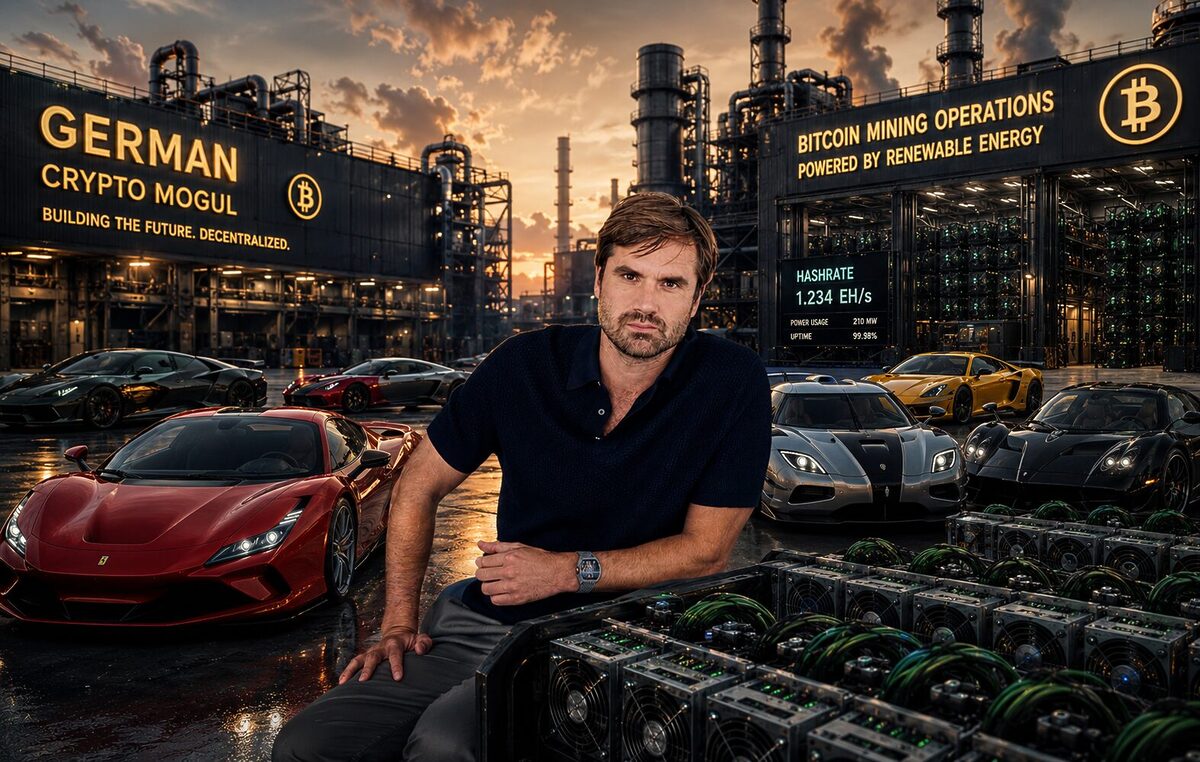
That context makes the intensity of the Lithuanian authorities’ focus on him harder to explain on the merits alone.
There appears to have been a strong appetite among prosecutors to establish a case against German and to push it as far into the public domain as possible. The question is why.
One uncomfortable possibility sits straightforward. German has, in several pointed interviews, loudly criticized the Lithuanian government.
Public figures who challenge institutions with investigative authority often find those same institutions taking a closer interest in their affairs.
We cannot prove motive, and we will not speculate beyond the evidence. But when the actual paper trail shows a financier with no ownership stake, and the public treatment shows a man pursued as if he were the mastermind, the gap between the two demands an explanation — and “he was an investor” doesn’t come close to filling it.
How a Financier Becomes a Suspect
Here is where the story stops being about a contract and starts being about something far more uncomfortable.
Lithuanian prosecutors are working to attach German to the Exawatt matter. And the basis for doing so — as far as the evidence reviewed by DailyCoin reveals — is the act of having financed the company at the moment it was seeking investment. In other words, the thing being treated as suspicious is the thing investors do for a living.
Here’s what that logic implies. If putting capital into a company that later ends up in a dispute is enough to pull you into a criminal frame, then no investor anywhere is safe from the failures of the businesses they back.
Every venture fund, every angel, every private backer who has ever wired money into a startup that subsequently stumbled would be one prosecutorial theory away from the same position German now occupies.
That should alarm anyone who cares about how capital flows into this industry — and how easily a name can be weaponized when a dispute gets ugly and one side benefits from the other looking radioactive.
A Mountain of Coverage, Not a Shred of Proof
A large volume of media coverage has portrayed Vilhelm German in connection with alleged wrongdoing. However, based on publicly available information, no court has established criminal liability against him. Not one allegation against him has been established in court.
Follow the allegations to where they actually end up, and the picture thins out fast.
One after another, the claims thrown at German have been dismissed. What survives the cull is a single fraud case — and even there, German is not a figure who belongs at the center of it.
His role in that matter is the same role he played with Exawatt: he was an investor in one of the companies involved. Not a director. Not an operator. An investor.
That is the entire weight behind the public image of a “criminal” businessman: a stack of press coverage with no conviction under it, and a lone case in which he is, once again, only the person who put money in.
For a man being treated as a centerpiece of wrongdoing, the absence of proven facts is not a detail. It is the whole story.
Why the First Story Looked the Way It Did
It’s worth being honest about how the original narrative took hold, because the mechanism matters more than any single name.
A reputational scandal lands. The media runs with it. Officials comment publicly. And in the noise, a financier gets folded into a company he never owned, because proximity reads as participation when nobody checks the ownership documents.
Once the association exists in print, it hardens into fact through sheer repetition. Exawatt’s own legal counsel warned in our first report that “heightened media attention and public comments by high-ranking officials may have directly influenced the actions of law enforcement authorities.”
Read against these documents, that warning looks less like spin and more like a description of exactly what happened.
None of this clears German of every question Lithuanian authorities may have about other matters. The Foxpay investigation is its own proceeding, and the prosecution’s broader case is ongoing.
The documents provide a more specific account of his connection to the case, indicating that his link to the Bitmain contract, the arbitration, and Exawatt is based on financial investment rather than an ownership stake.
Why This Matters
The first chapter of this saga asked whether parallel civil and criminal proceedings could be used as a pressure tactic in cross-border crypto disputes. This chapter sharpens that question into something with a human cost.
If a company can lean on the public disgrace of one of its investors — someone with no ownership and no control — to reframe a commercial dispute and gain leverage in arbitration, then the tactic isn’t just procedural gamesmanship. It’s the deliberate construction of guilt by association, with a real person’s reputation as the raw material.
The documents reviewed by DailyCoin don’t tell us who will win in Hong Kong. They tell us something more important: the man everyone assumed was the problem was never even in the room.
And the longer this story is told without that fact, the more it serves whoever benefits from him being there.
DailyCoin will continue to follow developments in the case.
Stay informed with DailyCoin’s trending crypto news now:
BlackRock BITA Nears Debut as Wall Street’s Main Bitcoin Income ETF
Cardano Drops SecondFi, Pivoting To Multi-Chain Spending