

Strategy (MSTR) is once again turning to capital markets to fuel its Bitcoin (BTC) accumulation. The company, the largest corporate holder of Bitcoin, plans to issue additional perpetual preferred shares as part of a broader effort to continue buying BTC while easing investor concerns over swings in its common stock.
The move comes as Strategy’s shares have dropped nearly 17% since the start of the year. As of February 12, the company holds 714,644 BTC at an average cost of $76,052 per coin. With Bitcoin trading near $67,000, Strategy is facing an unrealized loss of roughly $6.5 billion.
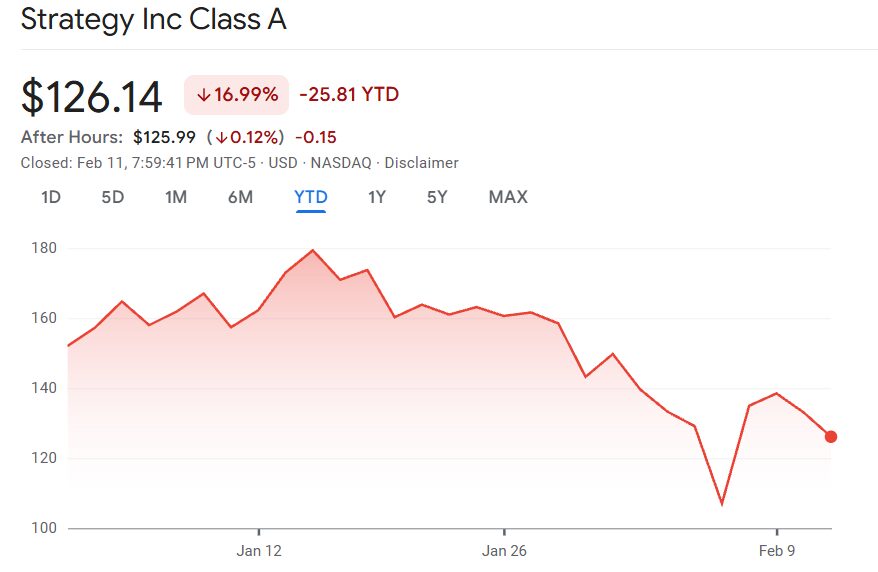
In a Bloomberg interview, CEO Phong Le explained that Bitcoin’s price swings directly drive the company’s common stock, amplifying gains in rallies and losses in downturns.
Sponsored
To provide investors with a steadier option, Strategy is promoting its perpetual preferred shares, called “Stretch,” which pay a variable 11.25% dividend and are engineered to trade near $100.
Preferred shares remain a small part of Strategy’s funding, like $7M versus $370M in common stock, but they’re now part of how the company keeps buying Bitcoin.
Funding Bitcoin With a Different Risk Profile
Perpetual preferred stock generally pays fixed dividends, has priority over common stock in payouts or bankruptcy, and does not have a maturity date. That bond-like structure can appeal to yield-focused investors who want exposure to Strategy’s Bitcoin holdings without daily price swings.
Strategy has used similar financing methods before, but the renewed focus on preferred shares highlights how capital markets are central to its Bitcoin accumulation plan. The company continues to maintain high-beta exposure to BTC while offering a less volatile option for equity investors.
The announcement comes amid heightened market volatility, as crypto markets have faced a risk-off environment and Bitcoin-linked equities have often moved more sharply than the underlying asset. MSTR has historically traded as a leveraged proxy for Bitcoin, amplifying gains during rallies and losses during downturns.
Issuing preferred shares could reduce short-term dilution of common stock, though it adds ongoing dividend obligations. The appeal of the offering will depend on its pricing, yield structure, and how investors interpret it, either as a high-yield investment or as a way to gain BTC exposure with the dividend component.
Why This Matters
Strategy’s use of structured financing to buy Bitcoin underscores ongoing corporate demand while prompting questions about how much of the market is driven by engineered flows.
Discover DailyCoin’s popular crypto news today:
Newly Surfaced 2014 Email Suggests Early Push To Block XRP Funding
Stellar Trapped: XLM Bounce Stalls Despite Oversold Record
People Also Ask:
Preferred shares are a type of stock that usually pays fixed dividends, has priority over common shares in payouts, and often doesn’t carry voting rights.
Perpetual preferred shares have no maturity date, so the company doesn’t have to repay the principal unless it chooses to redeem the shares.
Funds raised from preferred shares provide capital that Strategy can use to purchase Bitcoin while offering a less volatile investment option for shareholders.