

Chainlink’s long-awaited ETF is set to debut on NYSE Arca today, December 2, as asset manager Grayscale converts its closed-end LINK trust into an ETF structure.
The Grayscale Chainlink Trust ETF (GLNK) provides investors regulated exposure to LINK without the need to buy or store the token directly.
GLNK is the first U.S.-listed spot-price LINK ETF, giving both traditional and institutional investors a new avenue to access the cryptocurrency. According to the fund’s filings, it may also incorporate staking returns on underlying LINK holdings. Foreside Fund Services, LLC is listed as the fund’s marketing agent.
Sponsored
However, Grayscale notes that the ETF is not registered under the Investment Company Act of 1940, meaning it does not have the same regulatory protections as conventional ETFs and mutual funds.
Chainlink operates as an oracle network, connecting blockchains to external data, and has been adopted by national governments, major DeFi protocols, and traditional financial institutions. LINK, its native token, has a market capitalization approaching $8.5 billion, ranking it among the top 25 cryptocurrencies.
LINK Price Drops Amid Market Pullback
Despite the ETF news, LINK has fallen nearly 9% since Sunday, hitting a low of $11.79 on Monday as broader crypto markets retraced.
Analysts note that LINK remains below its 9- and 20-month moving averages (~$16) and has broken below the genesis AVWAP ($13.12), a key structural support level.
The coin currently sits on historically respected long-term lower trend support, but faces resistance at $15–$16 after rejection at a high-volume node.
A thin volume gap between $13 and $8 could accelerate price declines if support fails.
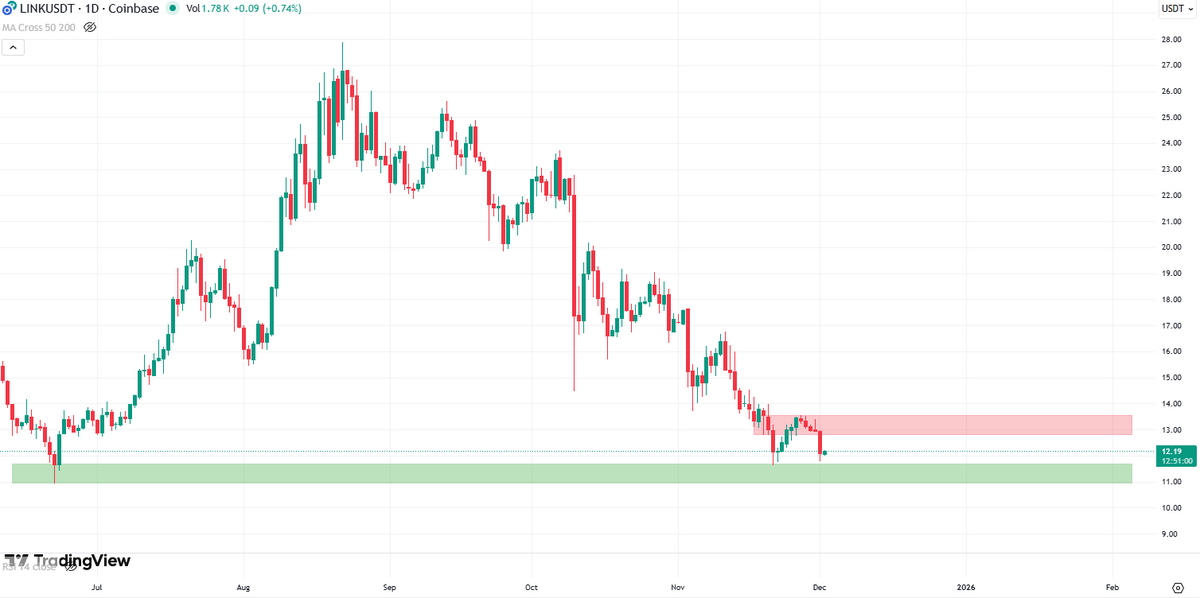
However, near-term support is currently around $11.72, with resistance at $12.76, the prior breakdown point.
Why This Matters
The launch of the LINK ETF signals growing institutional interest in altcoins, offering regulated access to the token even as short-term technical pressures weigh on its price.
Check out DailyCoin’s hottest crypto news today:
Vanguard Breaks Conservative Tradition, Opens to Crypto ETFs
Bitcoin Flash Crash, But Altcoins Show Signs of Macro Strength
People Also Ask:
A Chainlink ETF is an exchange-traded fund that gives investors exposure to LINK, the native token of the Chainlink oracle network, without requiring direct ownership of the cryptocurrency.
Grayscale Investments is launching the Grayscale Chainlink Trust ETF (GLNK), converting its existing closed-end LINK trust into an ETF structure.
The ETF holds LINK tokens and aims to track the token’s price. Some ETFs may also offer staking returns, allowing investors to earn rewards on the underlying holdings.
It is the first U.S.-listed spot-price LINK ETF, providing a regulated and easy way for institutional and retail investors to access Chainlink.
Yes. LINK is volatile, and the ETF is not registered under the Investment Company Act of 1940, so it lacks some of the protections of traditional ETFs.