

Bitcoin (BTC) experienced a sharp decline on February 5, sending ripples through global crypto markets.
The world’s largest digital asset briefly dipped below $61,000 during intense selling pressure, part of a broader slide that erased more than half its value from an all-time high above $126,000 reached in October 2025.
Sponsored
Nors daug kas speliojo, kokie underlying fundamental issues si karta sukrete rinka, patyre analitikai attribute the sharp Bitcoin selloff to technical market factors.
Jeff Park, CIO at ProCap and advisor at Bitwise Invest, wrote in his X thread that the sell-off was largely driven by forced deleveraging in traditional finance portfolios, rather than large-scale selling by crypto-native investors.
According to him, the sell-off unfolded during a period of unusually tight correlation between Bitcoin and broader risk assets, particularly software stocks.
Multi-strategy funds took the hardest hit, with February 4 marking an unusually severe market shock. The day’s moves were so extreme that they registered a z-score of 3.5, an event that happens in just 0.05% of trading days.
The forced de-risking and rapid unwinding of positions by these funds spilled into February 5, driving even greater volatility across both crypto and traditional markets.
BlackRock’s IBIT ETF saw record trading volume of over $10 billion, double its previous high, while options activity surged to historic levels, unusually dominated by puts, indicating an intense downside pressure.
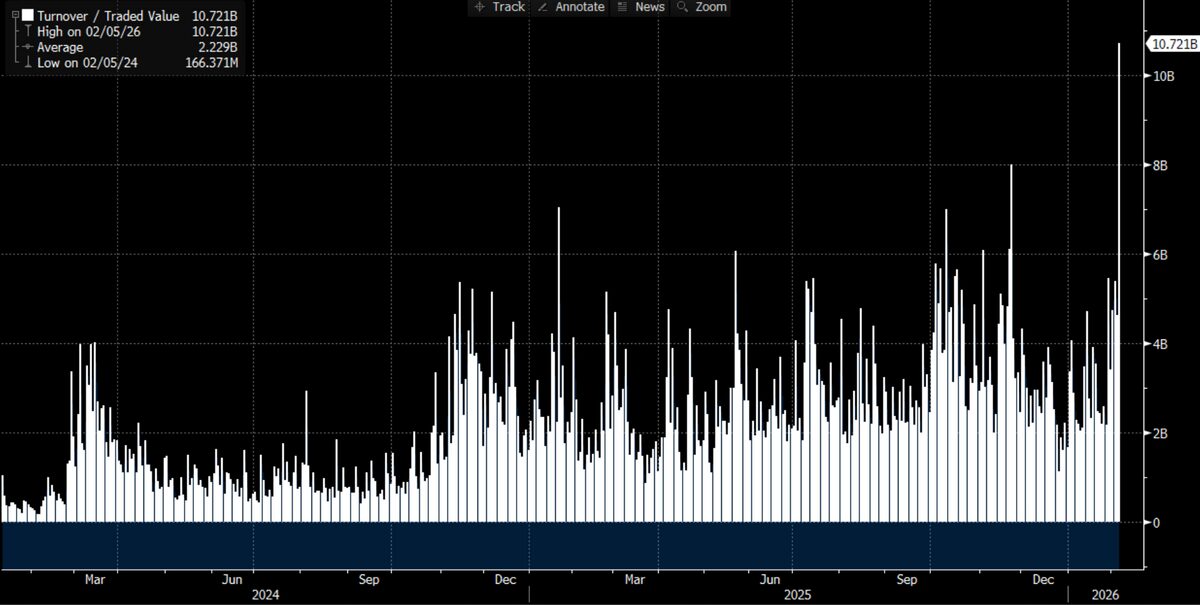
Yet despite a 13.2% drop in IBIT’s price, investors did not redeem shares as might have been expected. Instead, 6 million new shares were created, adding more than $230 million in assets under management, while the wider ETF complex drew in over $300 million in inflows.
According to Park, the pattern suggests the sell-off was largely driven by dealers and market makers rather than retail panic.
As of February 9, Bitcoin was trading around $70,500, up modestly in recent sessions but still well below earlier highs, reflecting ongoing volatility in the market.
Why This Matters
The crash highlights how closely Bitcoin is now linked to Wall Street, where shocks in traditional finance can ripple through the crypto market.
Dig into DailyCoin’s popular crypto news today:
Bithumb’s Costly Glitch Highlights Risks in Centralized Crypto Exchanges
Bitcoin in Consolidation: Trader Warns of Potential Final Leg Down
People Also Ask:
TradFi (traditional finance) deleveraging occurs when banks, funds, or other financial institutions reduce risk by selling assets to lower exposure, often causing price drops in correlated markets.
Bitcoin ETFs allow institutional and retail investors to trade Bitcoin indirectly. Large ETF creations or redemptions can push Bitcoin’s price up or down due to supply and demand dynamics.
ETF flows depend on investor behavior. Sometimes, price drops are driven by hedged dealer activity rather than retail panic, resulting in net creations instead of redemptions.